-
 Clean Air Now: Prioritize Our Kids in the Clean Air MovementJoin Our Urgent Cause: Every signature brings us closer to ensuring our youngest and most vulnerable have a safe and healthy learning environment. Sign now for immediate action in our schools and daycares, paving the way for cleaner air in all public buildings.5 of 100 SignaturesCreated by Clean Air For All
-
The Cruel Reality of the Biomass industryClear cutting of Primary Old Growth Forests in BC is being accelerated in the name of green energy production - somehow even shipping our pelletized forests to be burned in the UK as a means to green wash their country's largest coal fired power plant. This large scale fraud not only expedites the destruction of what remains of Canada's old growth forests. It also works against the reduction of carbon emissions while stating the contrary. This is a massive scam that cannot be allowed to continue.11 of 100 SignaturesCreated by patrick ellard
-
Recycling is not free: Packagers must payPlastic bottles end up in the waste stream and littering the landscape. Estimates suggest less than a third of plastic drink bottles get recycled in the U.S. As many as 34 billion plastic bottles end up in the oceans each year. But this is a solvable problem as companies like Coca Cola actually produce refillable containers in some markets. We should mandate that for Canada. https://www.fastcompany.com/90721672/refillable-soda-bottles-coca-cola https://oceana.org/wp-content/uploads/sites/18/3.2.2020_just_one_word-refillables.pdf Another obvious example is food packaging -- is it necessary to package tomatoes in single-use plastic? This case is more nuanced in some cases due to food spoilage concerns. But certainly sometimes I can buy tomatoes in bulk. If the packaging cost is borne by the producer, the bulk tomatoes would have the advantage and over time waste is reduced. https://foodpolicyforcanada.info.yorku.ca/plastic/10 of 100 SignaturesCreated by Steven Robbins
-
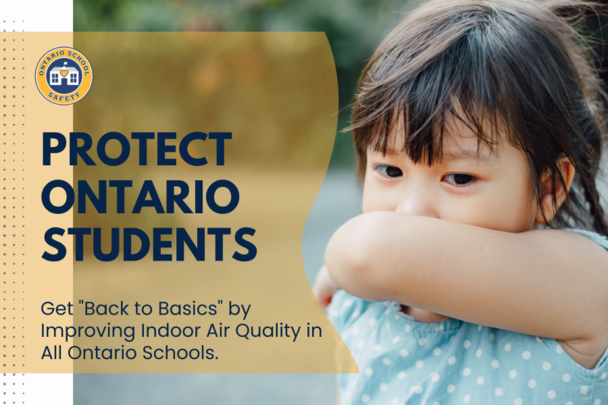.png) Support Improving Air Quality Standards for Schools & Childcare Centres - Bill 140Without the backing of our Members of Provincial Parliament (MPPs), Bill 140 faces the risk of being shelved, depriving our schools, students and education workers of the chance for a healthier learning and working environment. Clean indoor is important: Health and Safety: Poor air quality can lead to a range of health issues, including respiratory problems, allergies, and the spread of infectious diseases. Ensuring that the air quality in schools meets current standards is a fundamental step in protecting the well-being of those who spend significant amounts of time in educational settings. Educational Outcomes: There is a well-documented link between air quality and cognitive function. Cleaner air can improve concentration, productivity, and overall academic performance. Transparency and Accountability: By mandating the public reporting of CO2 levels, this bill promotes transparency, allowing parents and the wider community to be informed about the air quality in schools and childcare centers. This information is critical for ensuring accountability and pushing for necessary improvements. Proactive Health Measures: The requirement for an Air Quality Action Plan ensures that there are predefined steps to take when air quality drops, potentially preventing health issues before they arise and ensuring a quick response to any air quality concerns. Economic Sense: Investing in better air quality has economic benefits. By reducing the number of sick days for both students and staff, there is less disruption to learning and work, which has a positive impact on productivity and educational outcomes. Additionally, the long-term healthcare savings from preventing air quality-related illnesses can be substantial. Setting Standards: Ontario currently lacks clear regulations for indoor air quality in schools, putting students and staff at a disadvantage. Implementing such standards would not only protect them but also position Ontario as a leader in educational health and safety standards. Global Competitiveness: Other regions that have adopted similar measures have seen positive outcomes. Supporting this bill would allow Ontario to keep pace with global best practices in educational and childcare environments, making it a more attractive place to live, work, and learn. Long-Term Benefits: The investment in air quality monitoring and improvement is not just a short-term fix; it's an investment in the future health and cognitive abilities of the community’s children. Healthy students are more likely to grow into healthy adults, contributing positively to society. With the support of Members of Provincial Parliament (MPPs), we can implement vital measures like Bill 140 to ensure our schools have clean air, thereby securing a safer, healthier, and more academically conducive future for our students and education workers.11 of 100 SignaturesCreated by Ontario School Safety
Support Improving Air Quality Standards for Schools & Childcare Centres - Bill 140Without the backing of our Members of Provincial Parliament (MPPs), Bill 140 faces the risk of being shelved, depriving our schools, students and education workers of the chance for a healthier learning and working environment. Clean indoor is important: Health and Safety: Poor air quality can lead to a range of health issues, including respiratory problems, allergies, and the spread of infectious diseases. Ensuring that the air quality in schools meets current standards is a fundamental step in protecting the well-being of those who spend significant amounts of time in educational settings. Educational Outcomes: There is a well-documented link between air quality and cognitive function. Cleaner air can improve concentration, productivity, and overall academic performance. Transparency and Accountability: By mandating the public reporting of CO2 levels, this bill promotes transparency, allowing parents and the wider community to be informed about the air quality in schools and childcare centers. This information is critical for ensuring accountability and pushing for necessary improvements. Proactive Health Measures: The requirement for an Air Quality Action Plan ensures that there are predefined steps to take when air quality drops, potentially preventing health issues before they arise and ensuring a quick response to any air quality concerns. Economic Sense: Investing in better air quality has economic benefits. By reducing the number of sick days for both students and staff, there is less disruption to learning and work, which has a positive impact on productivity and educational outcomes. Additionally, the long-term healthcare savings from preventing air quality-related illnesses can be substantial. Setting Standards: Ontario currently lacks clear regulations for indoor air quality in schools, putting students and staff at a disadvantage. Implementing such standards would not only protect them but also position Ontario as a leader in educational health and safety standards. Global Competitiveness: Other regions that have adopted similar measures have seen positive outcomes. Supporting this bill would allow Ontario to keep pace with global best practices in educational and childcare environments, making it a more attractive place to live, work, and learn. Long-Term Benefits: The investment in air quality monitoring and improvement is not just a short-term fix; it's an investment in the future health and cognitive abilities of the community’s children. Healthy students are more likely to grow into healthy adults, contributing positively to society. With the support of Members of Provincial Parliament (MPPs), we can implement vital measures like Bill 140 to ensure our schools have clean air, thereby securing a safer, healthier, and more academically conducive future for our students and education workers.11 of 100 SignaturesCreated by Ontario School Safety
-
Require foods to be labelled clearly as containing or not containing animal productsAccording to Statista, "In 2020, almost 40 percent of consumers in a survey in Canada stated that they were willing to reduce their meat consumption, whilst around 9 percent were fully intending on doing so." When we don't provide clear labelling for this information, it doesn't only affect Canadians with existing dietary restrictions, it also poses an unnecessary challenge for those of us who are interested in reducing meat and dairy consumption but haven't quite gotten there yet. In 2018, nearly 10% of Canadians were either vegetarian or vegan. That number has since grown. Why would we make life harder for 1 in 10 Canadians instead of simply updating labelling requirements to provide information which is already accessible to producers? If India can do it, so can we.14 of 100 SignaturesCreated by Gary Thompson
-
.png) Energy justice for those most in needMore than 4.5 million Canadians — often those who need it most — are left out of Canada’s federal energy efficiency programs. The federal government has strong public support for expanding low-income energy efficiency. According to polling conducted by Abacus Data for Efficiency Canada, 72% of Canadians either strongly support or support government funding toward energy efficiency for low-income housing. This support spans across rural and urban populations, owners and renters, all income groups, voters for all political parties and in all regions [1]. Canada will not meet its net-zero emissions goal without upgrading the buildings where low-income Canadians live. Without a national federal energy efficiency solution, low-income Canadians are vulnerable to rising energy costs due to inflation and carbon taxes. As Canada moves to net-zero emissions, higher income Canadians will be able to escape fossil fuels, leaving lower income Canadians with the burden of paying higher costs for fossil fuel distribution networks [2]. We have a chance to achieve this in the 2024 federal budget – but we must act quickly. Budget negotiations are happening right now. [1] https://www.efficiencycanada.org/polling-canadians-support-low-income-energy-efficiency/ [2] Efficiency Canada, Written Submission for the Pre-Budget Consultations in Advance of the Upcoming Federal Budget, Sept 2022, https://www.efficiencycanada.org/wp-content/uploads/2022/10/Efficiency-Canada-submission-to-Budget-2023-consultations.pdf6,673 of 7,000 SignaturesCreated by Emilie Grenier
Energy justice for those most in needMore than 4.5 million Canadians — often those who need it most — are left out of Canada’s federal energy efficiency programs. The federal government has strong public support for expanding low-income energy efficiency. According to polling conducted by Abacus Data for Efficiency Canada, 72% of Canadians either strongly support or support government funding toward energy efficiency for low-income housing. This support spans across rural and urban populations, owners and renters, all income groups, voters for all political parties and in all regions [1]. Canada will not meet its net-zero emissions goal without upgrading the buildings where low-income Canadians live. Without a national federal energy efficiency solution, low-income Canadians are vulnerable to rising energy costs due to inflation and carbon taxes. As Canada moves to net-zero emissions, higher income Canadians will be able to escape fossil fuels, leaving lower income Canadians with the burden of paying higher costs for fossil fuel distribution networks [2]. We have a chance to achieve this in the 2024 federal budget – but we must act quickly. Budget negotiations are happening right now. [1] https://www.efficiencycanada.org/polling-canadians-support-low-income-energy-efficiency/ [2] Efficiency Canada, Written Submission for the Pre-Budget Consultations in Advance of the Upcoming Federal Budget, Sept 2022, https://www.efficiencycanada.org/wp-content/uploads/2022/10/Efficiency-Canada-submission-to-Budget-2023-consultations.pdf6,673 of 7,000 SignaturesCreated by Emilie Grenier -
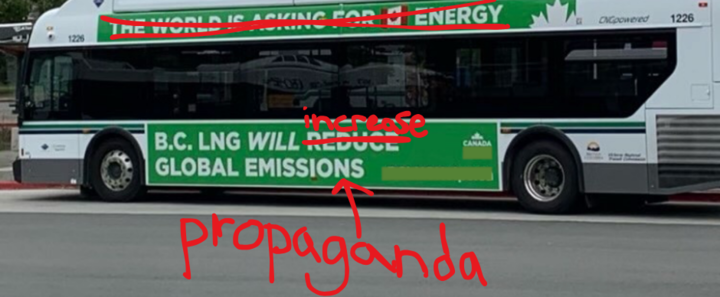 Ban Fossil Fuel Ads on TransitRapidly winding down emissions from fossil fuel extraction and burning is key to preventing climate collapse. Like cigarettes, fossil fuels are harmful products. If cigarette advertising isn't allowed on transit, why is fossil fuel advertising?3,818 of 4,000 SignaturesCreated by Peter Gibbs
 -
Make Markham's Main Street safer for pedestriansRoad safety is important for all, and especially for seniors & children. Main St. should be a place we can feel free to travel without undue concern for our safety. Everyone can agree that the community spirit shown at car-free days, festivals, farmers' markets, and events should be encouraged every day of the week!6 of 100 SignaturesCreated by Stephen Edgell
-
.png) Help us Breathe Easier in Schools – An Urgent Plea Regarding the Greenbelt and Air QualityEnough is enough. Now is the time to make sure we have a safe September. Now is the time to make sure every student and education worker walks into a safe, healthy environment. Let’s protect them by getting “back to basics” and providing clean air for them to breathe. Help us remind the Ontario government of its duty to protect students and education workers. Demand they take responsibility for this terrible failure to protect us all. Insist that they act to provide a safe September, and invest those unspent tax dollars on improvements to air quality in our schools - for the sake of our communities and healthcare system.529 of 600 SignaturesCreated by Ontario School Safety
Help us Breathe Easier in Schools – An Urgent Plea Regarding the Greenbelt and Air QualityEnough is enough. Now is the time to make sure we have a safe September. Now is the time to make sure every student and education worker walks into a safe, healthy environment. Let’s protect them by getting “back to basics” and providing clean air for them to breathe. Help us remind the Ontario government of its duty to protect students and education workers. Demand they take responsibility for this terrible failure to protect us all. Insist that they act to provide a safe September, and invest those unspent tax dollars on improvements to air quality in our schools - for the sake of our communities and healthcare system.529 of 600 SignaturesCreated by Ontario School Safety
-
Stop developing the greenbeltOntario has an opportunity to be a leading example of sustainable development. If we don't act now, the window will close forever.11 of 100 SignaturesCreated by Lance Secretan
-
No Mountain top coal mining in the East Slopes of AlbertaOur rivers, mainly the Oldman River, can’t be subject to selenium pollution without their fish populations being killed off. We see the desperate need to protect what little water we have. Stand up for what’s right.11 of 100 SignaturesCreated by Mike Oka
-
Save the Vancouver Island Corridor with a continuous multi-use trailThe Island Corridor is an irreplaceable public asset. Unless a continuous transportation use is found for it, it could be broken up. Many people thought rail service was needed to keep the corridor intact but all over the world unused rail corridors like this one are being saved for public use by converting them to highly successful active transportation routes as multi use trails. Now that rail service has stopped on the Island Corridor for 11 years for safety reasons there is an opportunity to do a rail trail here as a safe local alternative transportation option and a world class low impact tourism attraction. Let's make it happen!12 of 100 SignaturesCreated by Alastair Craighead
