-
 Stop AI Data Centres OttawaGovernments across Canada are racing to attract AI data centres by offering up electricity, water, land, infrastructure and public money. Big Tech captures the profits while communities pay the price. This includes strain on the energy grid, infrastructure costs, the damaging impacts on water and land and potentially higher energy bills. The federal government announced that it plans to construct a data centre within the Ottawa Region. The project would use 60 megawatts, enough energy to power at least 30,000 homes. Before anything is committed, we are calling on the Ottawa City Council to pass a data centre moratorium, understand the impacts of what data centres will do to Ottawans, and consult community before going forward. Ottawans won't pay the price for Big Tech's Data Centre.4 of 100 SignaturesCreated by Vi Bui
 -
.png) Tell the Canada Pension Plan: Protect our retirement security in a changing climateOur national pension manager is about to answer to Canadians – and we need thousands of voices there. Every two years, the Canada Pension Plan Investment Board (CPPIB), the organization responsible for managing the Canada Pension Plan, holds public meetings where Canadians can ask questions about how our national retirement fund is being managed. These meetings are rare opportunities for Canadians to demand answers – and they are often announced with little notice. We need thousands of voices across the country ready to be heard. The Canada Pension Plan is our money. It supports the retirement security of more than 22 million people, and those savings must be invested responsibly in our long-term best interests. Climate change creates serious risks for our economy, communities and retirement future – yet Canada’s pension manager continues to invest billions of dollars in fossil fuel companies and projects that are driving the climate crisis. Canadians deserve answers. Ahead of the public meetings, we are calling on our national pension manager to: • Present a credible climate plan showing how the Canada Pension Plan will reduce emissions across its investments and protect our retirement future. • Stop investing in fossil fuel expansion that puts Canadians’ retirement security at risk. • Respect Indigenous rights by ensuring investments uphold free, prior and informed consent. Add your name today. Together, we will deliver thousands of signatures at the 2026 public meetings and demand action from the people responsible for managing our national retirement fund. Canadians are raising their voices. Our pension manager must listen.5,056 of 6,000 SignaturesCreated by Cheryl Randall
Tell the Canada Pension Plan: Protect our retirement security in a changing climateOur national pension manager is about to answer to Canadians – and we need thousands of voices there. Every two years, the Canada Pension Plan Investment Board (CPPIB), the organization responsible for managing the Canada Pension Plan, holds public meetings where Canadians can ask questions about how our national retirement fund is being managed. These meetings are rare opportunities for Canadians to demand answers – and they are often announced with little notice. We need thousands of voices across the country ready to be heard. The Canada Pension Plan is our money. It supports the retirement security of more than 22 million people, and those savings must be invested responsibly in our long-term best interests. Climate change creates serious risks for our economy, communities and retirement future – yet Canada’s pension manager continues to invest billions of dollars in fossil fuel companies and projects that are driving the climate crisis. Canadians deserve answers. Ahead of the public meetings, we are calling on our national pension manager to: • Present a credible climate plan showing how the Canada Pension Plan will reduce emissions across its investments and protect our retirement future. • Stop investing in fossil fuel expansion that puts Canadians’ retirement security at risk. • Respect Indigenous rights by ensuring investments uphold free, prior and informed consent. Add your name today. Together, we will deliver thousands of signatures at the 2026 public meetings and demand action from the people responsible for managing our national retirement fund. Canadians are raising their voices. Our pension manager must listen.5,056 of 6,000 SignaturesCreated by Cheryl Randall -
Buy Canadian Means Nothing If Ford Won't. Cancel the $66M Staples Contract imposed on Teachers.Canada is in an economic war with the United States. Every dollar of public money sent to an American-owned company is a dollar that weakens our side. Ontario's Ford government awarded a $66-million sole-vendor contract to Staples, owned by New York private equity firm Sycamore Partners, while simultaneously urging Ontarians to buy Canadian. That hypocrisy isn't just embarrassing; it's actively undermining the national effort. Qualified Canadian and Indigenous suppliers exist, want the work, and have asked for the chance to compete. Ontario's 80,000 elementary teachers deserve suppliers who are on Canada's side. And Canadian children deserve to learn in classrooms where the pencils, paper and crayons were bought Canadian, not as an afterthought, but as a matter of principle. If Queen's Park won't hold the line on buying Canadian when it controls its own $66-million contract, it has no standing to ask the rest of us to do it at the grocery store.8 of 100 SignaturesCreated by Cal Gagnon
-
 Protect Hamilton: No Steelport AI Data Centre Without Public ConsultationAs the frenzy to build AI data centers sweeps Canada, Hamilton is next on the list. Slate Asset Management isn't taking NO as an answer and has appealed the rejection of their land severance application at the Ontario Land Tribunal (OLT). In April 2026, Slate requested a land severance to carve out an 188-acre parcel from their larger 706-acre Steelport industrial site at 386 Wilcox Street, so they can fast-track the development of a “hyperscale and enterprise data centre campus.” This fast-tracking will mean public input will be impossible and assessment won't be sufficient. Hamiltonians deserve a say. Since the beginning, Slate’s severance request has been met with massive public pushback. On June 4, 2026, the Hamilton Committee of Adjustment denied Slate Asset Management's land severance application. A record-breaking 1,600+ letters of opposition were submitted to the Committee of Adjustment, and hundreds of people showed up to the June 4 meeting. As suspected, Slate refuses to take no for an answer, and is now appealing this decision through the Ontario Land Tribunal, which is an independent government body that resolves disputes over land use planning, environmental protection, and municipal matters. People across Hamilton deserve a say in whether or not data centres are built in our city. We said NO. “Sign now to demand that the Mayor and Hamilton City Council guarantee public consultation, transparency and a robust environmental assessment.” If you want to apply to have your voice heard at the OLT, here is a toolkit to help you get started! More information: Slate Asset Management is working to build an AI-data centre campus at Steelport along the Hamilton waterfront — and they are trying to do it fast. We know they are interested in building both enterprise and hyperscaler AI data centres. The public only knows of one partner, the Digital Research Alliance of Canada (DRAC) and beyond that, there is very little public information. Hamilton has been dragged into the frenzy of AI data centre construction fuelled by the shortsighted greed of tech billionaires. With data centres going up at an alarming rate, we are collectively learning about the devastating impact they have on communities and the environment. It has become clear that the rapid development of AI technology poses serious threats to our brains, health, planet, communities and our future. This Steelport site is at the end of Gage Avenue and Industrial Drive — it is in a residential neighbourhood. In communities that already have a data center in their backyard, people are seeing their energy bills skyrocket. There are reports of brutal noise pollution and a spike in temperature as they create “heat islands,” warming the land around them. They are incredibly energy-intensive and tap into freshwater resources to cool the facility down. Alarmingly, any data centre could potentially use water from Lake Ontario to keep the facility cool. This is the same harbourfront that has been left severely contaminated by decades of industrial activity. And while remediation is underway, the clean-up is not finished. Large-scale water intake and discharge infrastructure being built during or even right after an active environmental remediation process makes NO sense. It is possible to force transparency, demand public input, and even stop development altogether. As a mom here in Hamilton, I do NOT want to see our community and its environment sacrificed for the profits of the tech industry. To make sure the Hamilton community, land and water are protected, we have to speak up! Follow noaigreed_hamilton on instagram and facebook for more information and ways to take action!8,854 of 9,000 SignaturesCreated by Jesse Whattam
 -
 Cancel Ben Shapiro's Conference in TorontoBen Shapiro is set to host a World Symposium against Antizionism in Toronto on May 17th, 2026. They are claiming that antizionism is equal to antisemitism, which is not true. This conference being set up is grossly unacceptable given Israel's continued years long genocide in Gaza. Toronto should not be hosting genocide defenders in its city. I am hoping to draw attention to and condemnation of this event, with the hopes that this event will not go through. Canada has been directly complicit in Israel's horrific human rights violations and war crimes in Gaza, and has done extremely little to actually help Palestinians. Hosting this event and events like it, led by Ben Shapiro of all people, who is known for his extremely bigoted views, will do nothing to actually combat antisemitism. Zionism and Judaism are not the same thing. Fighting against Zionism is not antisemitism, and the continued push for these to be seen as the same is incredibly dangerous and seeks to undermine efforts for Palestinian liberation. We can fight against antisemitism without demonizing those who oppose genocide.7 of 100 SignaturesCreated by Shelby Holmes
 -
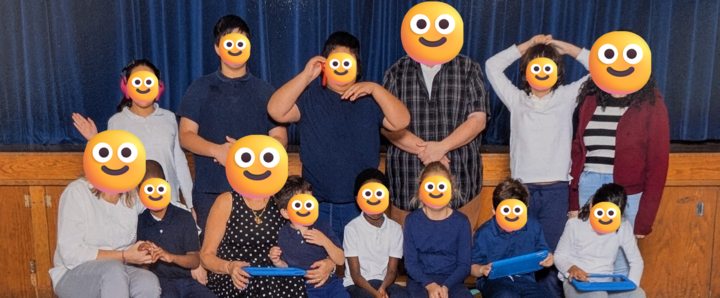 SAVE ST. MATTHEW'S MEDD PROGRAM“Every child deserves an education that meets their needs—not one that leaves them behind.” This program provides essential, specialized support for students with complex needs, including those who are non-verbal, require assistance with daily living skills, and depend on structured, low-ratio environments to learn safely and successfully. The MEDD program is not optional, it is critical to the well-being, safety, and development of these students. Removing it will significantly impact their ability to access education and may cause serious regression. We believe this decision undermines the rights of students with disabilities to receive appropriate and equitable education. We stand in support of these students and their families and advocate for their right to a safe, supportive, and accessible learning environment. Click here to read the full letter Click here for the petition hard copy Read the personal letters from the families affected: Mia Nico Julian Miguel Emma Joshua Abril Adriano Chanz Bentley2,666 of 3,000 SignaturesCreated by Diane Dias
 -
 Reject the 445 Adelaide West Hotel Proposal to Protect Sunlight, Heritage, and LivabilityThis project is not just another building. It directly affects the quality of life of residents, families, and the broader community. The proposed hotel at 445–451 Adelaide Street West would introduce new shadows on St. Andrew’s Playground and a nearby school yard. These are protected spaces where children play and where sunlight is essential for safety, health, and daily use. Once that sunlight is lost, it is gone permanently. The building is also significantly taller than what was previously rejected for this same site. Instead of addressing past concerns, the proposal increases the scale and intensifies the impact. It does not fit the character of the neighbourhood and risks eroding the heritage identity of King-Spadina. For nearby residents, the impacts are immediate and personal. The project introduces extremely close building distances, reducing natural light, blocking views, and creating direct overlook into homes. Because this is a hotel with constant turnover, the loss of privacy is even greater than with typical residential buildings. Environmentally, the project appears to meet only the bare minimum standards. There is little commitment to meaningful green infrastructure, tree preservation, or long-term sustainability in a dense urban area that already needs it. This is not about opposing development. Growth in Toronto is important. But it must be done responsibly, in a way that respects people, public spaces, and city policies designed to protect them. By signing this petition, you are asking decision-makers to uphold those policies and ensure that this project is either significantly redesigned or refused. This is about protecting our neighbourhood, our shared spaces, and the long-term livability of our city.209 of 300 SignaturesCreated by Olfa Maslah
 -
 PROTECT PEACHLAND'S OLD GROWTH & PRIMARY FORESTS FROM ALL COMMERCIAL LOGGING & PARTIAL CLEARCUTSThe Peachland Watershed Protection Alliance is asking for your support and consideration in assisting the 5,600 Peachland community stakeholders in our efforts to protect the many non-timber values of this land, most notably the critical watershed that supports our entire community and the many residents solely reliant upon the health and productivity of our watershed. The PWPA is concerned about BC Timber Sales’ (BCTS) plans to LOG three new cut blocks and associated roads the Glen Lake area. We believe that BCTS’ proposed 80+ hectares of partial clear cuts and 4+kms of roads blocks GL-007, GL-008 and GL-009 will have negative effects on our water and wildlife. When British Columbians, even Peachlanders, visualize old growth, places like Walbran, Carmanah, Clayoquot and Fairy Creek come to mind; towering trees, mossy floors, thick canopies, various species, a shady understory, on the rugged west coast. Did you know, the Peachland watershed holds some of the very same, rarest, at-risk old growth and primary forests left in the BC interior, and the stands that BCTS wants to log may be the last certified old growth in the entire Okanagan that has not been clearcut! Our concerns range from maintaining our communities’ drinking water quality to drought protection, flood management, and Northern Pygmy Owl habitat. We invite you to sign this petition if you believe your interests may be an " interest that may be affected" adversely by the proposed logging: agriculture, tourism, recreation, hunting, fishing, trapping, foraging, birding, SIGN NOW! To be clear, the facts indicate that logging in ANY Community Watershed poses an unacceptable risk to both the volume and quality of the waters available to our community during this time of Climate Change and the disruption of historical weather patterns and precipitation (both the amount of precipitation and when it falls). If it WAS safe to log a community watershed they would be logging the hillsides of Vancouver, North Van, Coquitlam and Victoria now! These once vast original forests, including groves many thousands of years old, have been logged with little thought to maintaining any other values except volume of trees extracted, and shareholder profits. Over successive generations of governments, BC has failed to protect its globally unique ecosystems contributing to Canada’s inability to meet its global commitments to climate change, biodiversity or forest degradation.788 of 800 SignaturesCreated by Taryn Skalbania
 -
 Carney: Say no to Military Action in the Middle EastAs Canadians, we are deeply concerned about reports that Canada could become involved in another military conflict in the Middle East. Military conflicts cost billions of dollars that ultimately come from taxpayers. At a time when Canadians are facing rising housing costs, inflation, and economic uncertainty, many people believe those resources should be focused on strengthening our communities here at home. Entering another war abroad would require significant public spending funded by taxpayers and could have long-term economic and humanitarian consequences. Canada has historically played an important role as a voice for diplomacy and peaceful solutions in global conflicts. Many Canadians want our country to remain a leader in promoting dialogue, stability, and international cooperation rather than becoming involved in another long and costly war. Before committing our country to military action, Canadians deserve transparency, parliamentary debate. We urge the government to prioritize diplomacy, stability, and the well-being of Canadians rather than rushing into another costly and prolonged conflict. Decisions about war should be made with extreme caution, transparency, and respect for the people who will bear the consequences. Sign this petition to demand that Carney not participate in military action in the Middle East.6,855 of 7,000 SignaturesCreated by Ahmed Abdelhamid
 -
 Ontarians against Ford's destruction of conservation in OntarioThe nunicipal levies and donors in each community ( that’s US, folks!) provide 82% of the money that our 36 Conservation Authorities need - and use - to protect the natural environment in each of their regions Withour money they a) Develop and maintain programs that will protect life and protect from natural hazards such as flooding and erosion. b) Develop and maintain programs that preserve natural resources, c)Ensure that Ontario’s water resources are properly safeguarded, managed and restore d) Protect, manage and restore Ontario’s woodlands, wetlands and natural habit. e) Connect people to the natural environment, so that they understand it’s vital importance and take part in helping protect nd conserve it. Our 36 regional conservation authorities have been doing an efficient, effective, excellent job of looking after our province’s natural environment needs for decades. The Ontario Government provides a measly 8% of the annual funding for those 36 conservation authorities. It has absolutely NO RIGHT to interfere with the work of our existing conservation authorities. They are each expert in the needs and demands of their own specific territory as a result of their ongoing studies and testing programs and their continuous efforts to deal with their region’s needs. The result is immediate action for the challenging problems that environmental chance is causing. Ontario wants to clump the 36 C.A.s into 7 mega regions. This will cause an enormous bureaucratic chaotic bungle that with disastrous environmental damage to the areas where we all live. The resulting delays will cause ballooning increase of the costs to solve the serious problems that result. And guess who will end up paying for these inflated costs. Yes – US, the TAXPAYERS. Unnecessary costs gobbling up money that should be directed towards the desperate needs of our health, education and infrastructure systems33 of 100 SignaturesCreated by Wendy Hoernig
 -
HUMANITARIAN AID FOR CUBADonald Trump has intensified U.S. sanctions to choke off oil shipments to Cuba, tightening the embargo and pressuring other countries and companies not to supply the island with fuel. Because Cuba depends on imported oil to keep its power plants, transportation, and hospitals running, the crackdown has fueled sweeping blackouts, paralyzed transit, and disrupted food and medical supply chains. The impact falls hardest on ordinary Cubans: hospitals struggle to operate, emergency services stall, and families face worsening shortages of basic necessities. When policies knowingly deprive civilians of electricity, healthcare, and food security, they cross from political pressure into collective punishment —undermining fundamental human rights. For decades, our country Canada has supported Cuba’s right to determine its own future. and has rejected the punitive policies of the United States government. But the newest blockade imposed by the Trump administration has brought the country to a level of unprecedented hardship: the Cuban people are now facing a dire humanitarian crisis. Canada’s silence and limited action in the face of this crisis is deeply disappointing. Our government must do far more.380 of 400 SignaturesCreated by John Cartwright
-
.png) Hootsuite: Cancel your contract with ICEHootsuite — a social media management company that profits from tools designed to track, amplify, and analyze online interactions — is now putting those tools in the hands of ICE. The Canadian-founded tech company is currently under contract with ICE — an agency synonymous with detention, deportation, family separation, and deaths in custody. Hootsuite’s CEO claims the deal doesn’t involve direct surveillance, but the same analytics and social-listening tools used by brands to track conversations and public opinion can also be used to map patterns, communities, and public response — tools critics warn can be repurposed for enforcement and profiling. Strip away the corporate language and it’s simple: Hootsuite is helping ICE do its job. Hootsuite knows exactly why people are furious — because they’ve been here before. In 2020, the company cancelled a similar ICE contract after employees and the public pushed back hard, openly acknowledging that working with an agency driving detention and deportation of immigrants conflicted with its values. But now leadership claims this contract is “different.” The backlash has been immediate and loud. Current employees have also been resigning in protest. Former staff, customers, and civil-rights advocates have strongly protested, with hundreds demonstrating dissent outside Hootsuite’s Vancouver headquarters just last week. The message is clear: partnering with ICE is a choice — and Hootsuite is choosing profit over people. We call on Hootsuite CEO Irina Novoselsky to immediately end all contracts with ICE, DHS, CBP, and any related immigration enforcement agencies, and to publicly commit to never doing business with ICE again. If you believe tech companies should not help power detention and deportation, sign this petition now.6,841 of 7,000 SignaturesCreated by Ellen Trottier
Hootsuite: Cancel your contract with ICEHootsuite — a social media management company that profits from tools designed to track, amplify, and analyze online interactions — is now putting those tools in the hands of ICE. The Canadian-founded tech company is currently under contract with ICE — an agency synonymous with detention, deportation, family separation, and deaths in custody. Hootsuite’s CEO claims the deal doesn’t involve direct surveillance, but the same analytics and social-listening tools used by brands to track conversations and public opinion can also be used to map patterns, communities, and public response — tools critics warn can be repurposed for enforcement and profiling. Strip away the corporate language and it’s simple: Hootsuite is helping ICE do its job. Hootsuite knows exactly why people are furious — because they’ve been here before. In 2020, the company cancelled a similar ICE contract after employees and the public pushed back hard, openly acknowledging that working with an agency driving detention and deportation of immigrants conflicted with its values. But now leadership claims this contract is “different.” The backlash has been immediate and loud. Current employees have also been resigning in protest. Former staff, customers, and civil-rights advocates have strongly protested, with hundreds demonstrating dissent outside Hootsuite’s Vancouver headquarters just last week. The message is clear: partnering with ICE is a choice — and Hootsuite is choosing profit over people. We call on Hootsuite CEO Irina Novoselsky to immediately end all contracts with ICE, DHS, CBP, and any related immigration enforcement agencies, and to publicly commit to never doing business with ICE again. If you believe tech companies should not help power detention and deportation, sign this petition now.6,841 of 7,000 SignaturesCreated by Ellen Trottier
